Near Dettifoss
A Dettifoss waterfall tour is never only about Dettifoss. It is 44 metres of one river in a canyon full of other things. Two of them are within a twenty-minute walk of where you will be standing, and almost nobody sees them. The rest are why your Dettifoss day is a seven-hour day rather than a two-hour one.
Selfoss — 600 metres upstream, on foot
Ten metres high and much wider than it is tall: a horseshoe of separate strands pouring off stepped basalt on both banks of the same river. The signpost at the west-side junction gives it as 0.6 kilometres, against 0.2 for Dettifoss. The national park rates the Dettifoss–Selfoss circuit easy, at about 2.5 kilometres and roughly an hour.
If you have forty minutes to spare, spend them here. Most day tours do not allow for it. One departure names Selfoss outright, and if this is what you came for, that is your tour.
Hafragilsfoss — 2 kilometres downstream, east side only
Twenty-seven metres, deeper into the canyon, seen from a rim viewpoint on Route 864. That road is gravel and shut from the first autumn snow until around the end of May, which is why most visitors never see it. Driving the east side in summer? It is a short detour and a genuinely different view. The canyon here is at its most coloured, with iron-oxide reds in the rock.
Ásbyrgi — a canyon shaped like a hoofprint
A horseshoe 3.5 kilometres long and about 1.1 wide, with cliffs reaching a hundred metres at its head. A rock island called Eyjan, up to 250 metres wide, stands down the middle. The national park gives two explanations and does not choose between them. Either glacial outburst floods, one 8,000 to 10,000 years ago and another about 3,000; or Sleipnir, Odin's eight-legged horse, setting down a hoof.
You will find a visitor centre, Gljúfrastofa, a large campsite, and ten marked trails running from half a kilometre to seventeen. The canyon trail from here through to Dettifoss is 32 kilometres. Most Diamond Circle days give you forty-five minutes to an hour, which reaches the Botnstjörn pool and not much else.
Goðafoss — the first stop on almost every day
Twelve metres high and about thirty across, on the Skjálfandafljót, forty minutes from Akureyri and on the way to everything. It is the shapeliest waterfall in the north and the one that photographs best in bad light.
The story you will be told is that in the year 1000, after the lawspeaker Þorgeir Ljósvetningagoði declared Christianity Iceland's religion, he threw his statues of the old gods into the falls. Hence the waterfall of the gods. The conversion is documented history. The throwing is not in the sagas and is generally reckoned a nineteenth-century invention — which is a better story than the story.
Lake Mývatn — the other half of the day
The name means midge lake, and in June and July it earns it — though the midges do not bite. The lake hosts more nesting duck species than anywhere else in Europe. Around it sit the stops your tour will pick two or three of:
- Skútustaðagígar — Iceland's largest and best-preserved pseudo-crater field, fifty-plus craters formed about 2,300 years ago when lava ran over waterlogged ground and flashed the water to steam.
- Dimmuborgir — lava towers and arches from the same episode, with marked loops from fifteen minutes to over an hour.
- Hverir, at the foot of Námafjall — fumaroles, boiling mud and a smell you will remember. Námafjall is the mountain; Hverir is the field.
- Grjótagjá — a lava cave with a hot spring in it, too hot to bathe in now.
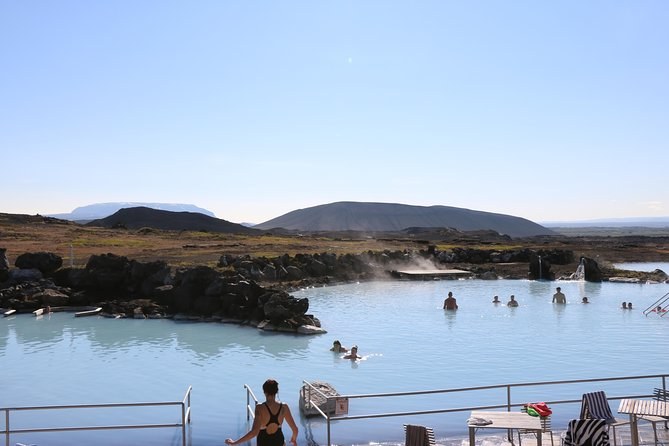
- Mývatn Nature Baths — the geothermal lagoon. Entry is extra on every departure that stops there, and one traveller's verdict was that it is expensive and rushed on a nine-hour day.
Húsavík — whales, and the stop that gets cut
A harbour town on Skjálfandi bay where commercial whale watching in Iceland began in 1995. Humpback and minke are seen regularly from roughly March to November, with June to August the peak. The bay is rich enough that twenty humpbacks in a day is not unheard of. The wooden church on the main street is the other thing you will photograph.
On a Diamond Circle day you get twenty minutes to an hour and a half here, and it is the first stop cut when the day runs late. A whale-watching sailing takes three hours on its own, so you cannot pair it with Dettifoss in one day.
At a glance
| Place | From Dettifoss | Time to allow | Reachable how |
|---|---|---|---|
| Selfoss | 0.6 km | 40 min return | On foot from the west car park |
| Hafragilsfoss | about 2 km | 20 min | By road, east side only, summer only |
| Lake Mývatn | about 40 min | 2–4 hours | By road; on every day tour |
| Goðafoss | about 1 h 20 | 35–45 min | By road; on every day tour |
| Ásbyrgi | 1.5 h by road, 32 km by trail | 1–3 hours | By road, or a full day’s walk |
| Húsavík | about 1.5 h | 20 min–3 hours | By road; on the circle tours |
For how these fit into one day, the Diamond Circle. For how the canyon and all of it came to be there, how Dettifoss was made. To compare the trips, Dettifoss Tours.
Tours that reach more than the waterfall
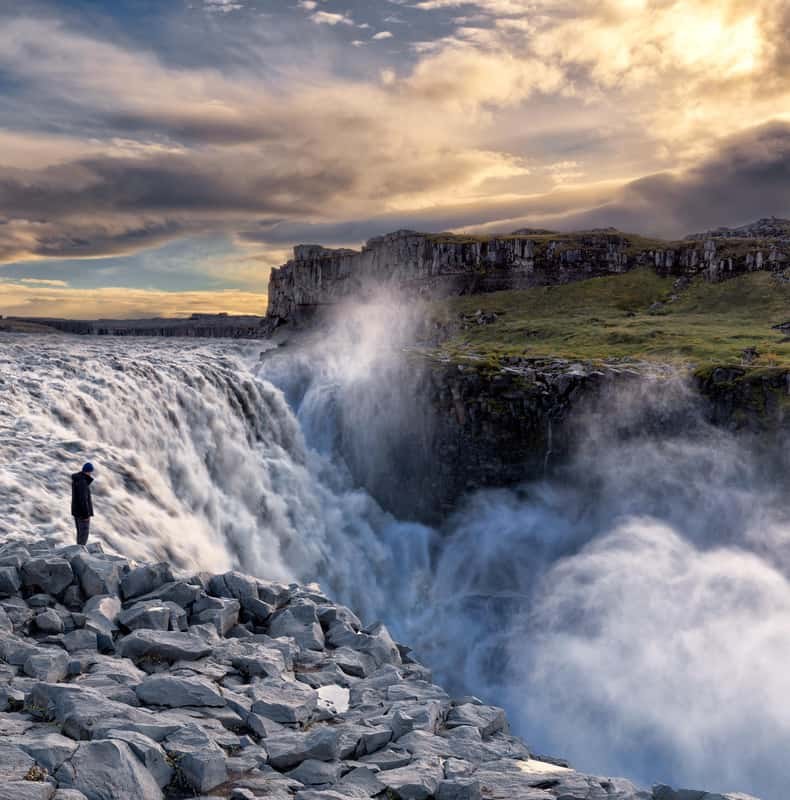
From Akureyri Port: Diamond Circle Guided Day Trip w/ Lunch
Lunch includedCruise pier80 minutes at the falls
From $209 per person
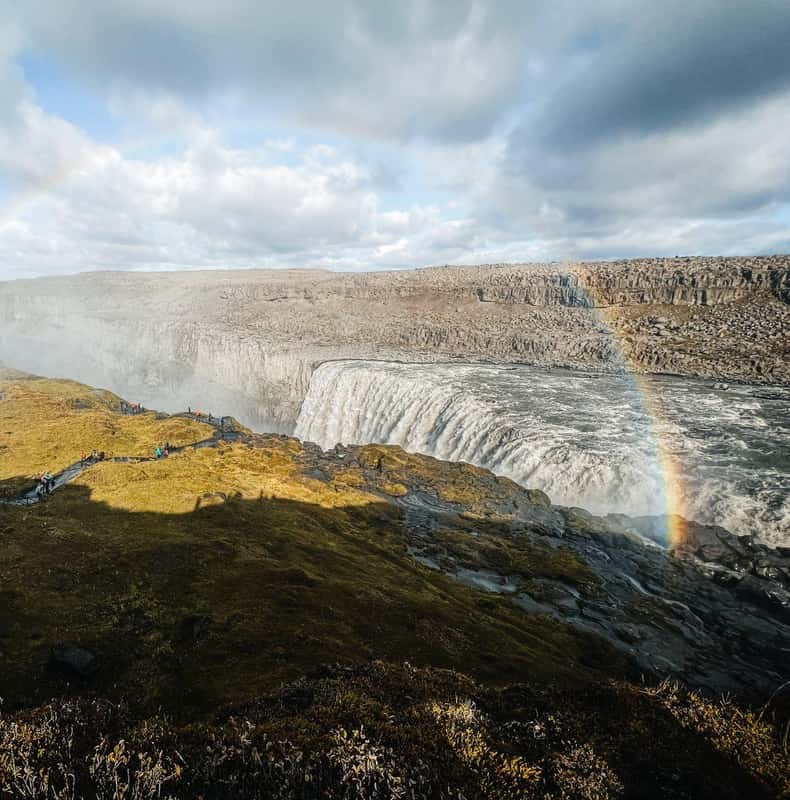
Port Akureyri: Godafoss Waterfall, Myvatn and Dettifoss
Cruise pier40 minutes at the falls
From $255 per person